Hosting

Hosting Renewal Prices Explained: What You Pay After Year One
You signed up for hosting at $2.99 a month. A year later the invoice says $11.99 — a 300% increase for exactly the same service. Nothing was hidden, exactly; it was just in small grey text under the price. Understanding hosting renewal pricing before you buy saves both money and frustration, and it’s one of the most important checks when comparing providers in 2026.
This guide explains how introductory pricing works, where to find renewal rates, how to calculate the real multi-year cost of hosting renewal, what to do at renewal time, how to avoid surprise charges, and the red flags to watch for on pricing pages. Black Friday on November 27, 2026 brings some of the deepest hosting discounts of the year, which makes understanding renewal pricing even more important.
Most shared hosts advertise a heavily discounted first term. The discount usually applies only to the initial period you pay for — often longest and cheapest on a three-year prepayment.
This model isn’t dishonest, but it makes comparing hosts by headline price meaningless. The real question is what you’ll pay over the years you actually use the service.
Check renewal pricing for the domain too, which follows the same pattern — see Domain Renewals: 7 Essential Checks to Avoid Expiration.
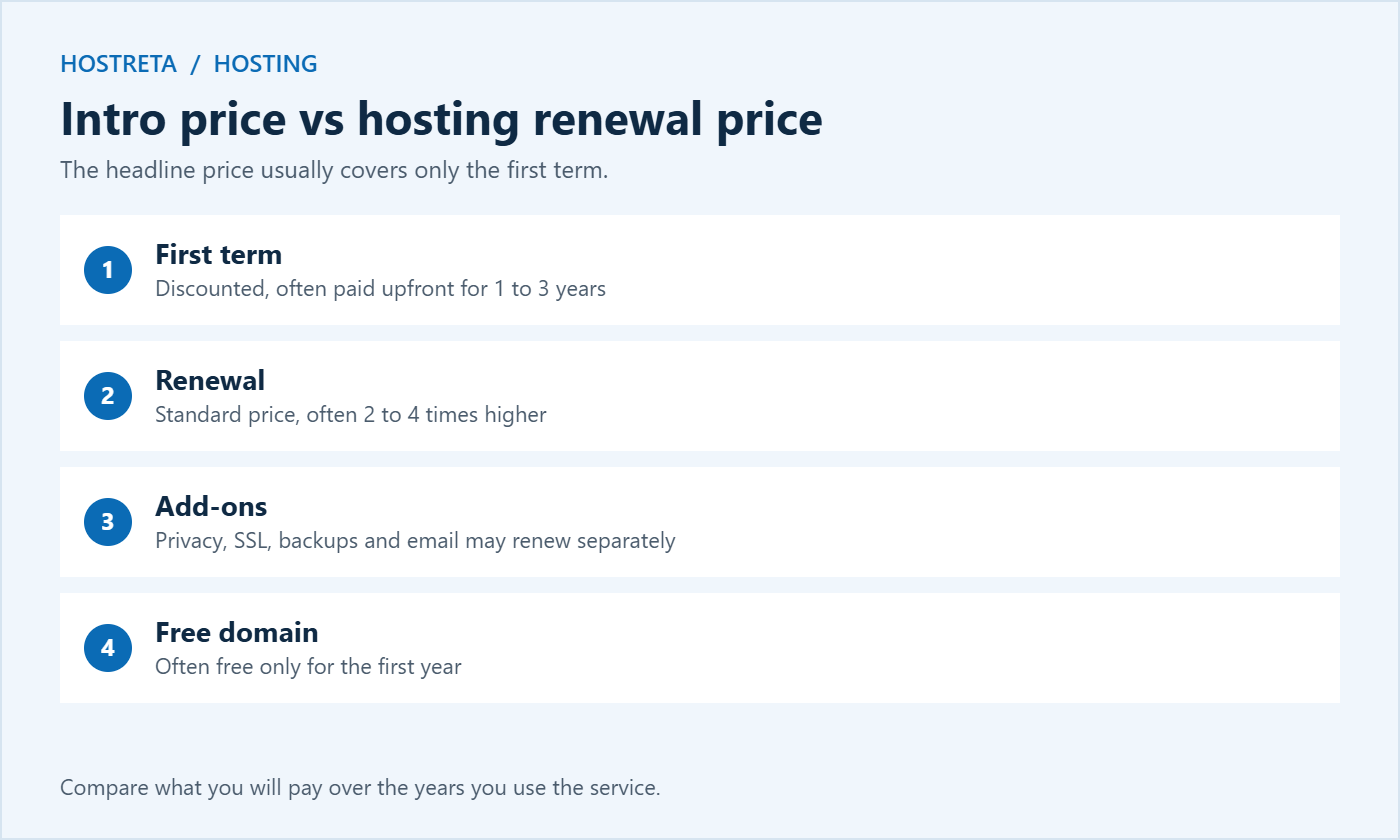
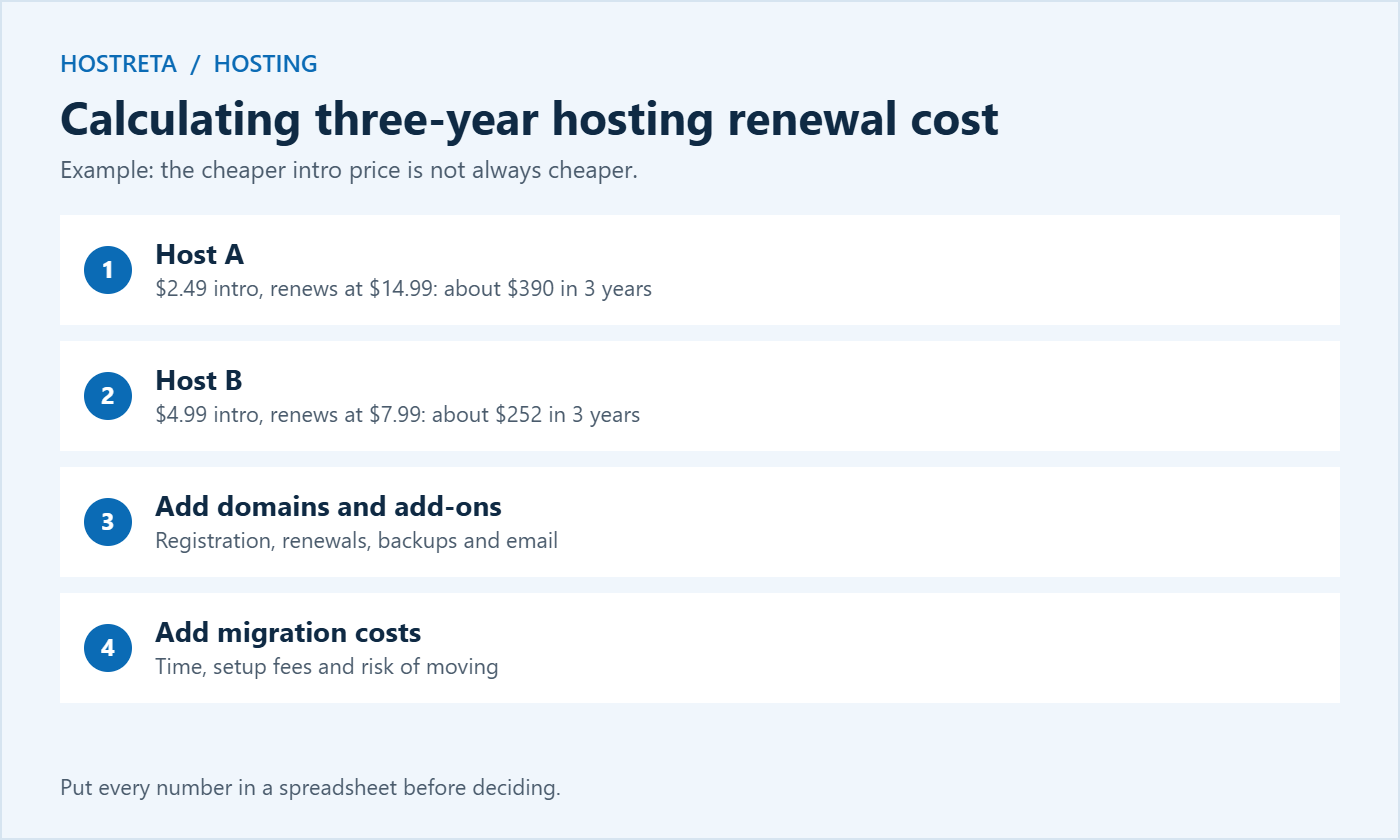
Compare hosts over three years, not one:
A host at $4.99 renewing at $7.99 can easily beat one at $2.49 renewing at $14.99. Put the numbers in a spreadsheet before deciding — and weigh them against speed, support, and limits, as in Web Hosting Buyer Guide: 7 Essential, Safe Choices.
Host A: $2.49 a month for a 12-month first term, renewing at $14.99. Over three years: $29.88 + (24 × $14.99 = $359.76) = about $390. Host B: $4.99 a month for 12 months, renewing at $7.99. Over three years: $59.88 + (24 × $7.99 = $191.76) = about $252. Host B costs twice as much in year one but saves nearly $140 over three years. Add domain and add-on costs to both, and the gap may widen further.
Tips for finding fair deals are in Hosting Deals and Discounts: How to Get the Best Price.
When comparing providers, look for clear renewal prices on the pricing page, free SSL, included backups, and transparent limits. Kawedma lists its plans for shared hosting, WordPress hosting, VPS servers, and reseller hosting with straightforward pricing, and its domain promotions page shows current domain offers. Hosting.com offers shared hosting, managed WordPress hosting powered by Rocket.net, and managed VPS hosting. Whichever you consider, check the renewal rate for your exact plan and term before you buy.
Different types of hosting follow different pricing patterns, so it helps to know what to expect at hosting renewal for each:
If your site is growing, factor in the likely upgrade path too. A plan you outgrow within a year may cost more overall than starting one tier higher — see Shared vs VPS vs Cloud Hosting: Which One Do You Need?.
A simple spreadsheet removes the guesswork. Create one row per host and plan, with these columns:
Sort by the three-year total, then use the notes column to decide between the closest options. Price matters, but a slow or unreliable host costs more in lost visitors than it saves on invoices — see What Is Uptime? And Why 99.9% Isn’t Always Enough.
If you manage several websites, renewals can arrive throughout the year and add up quickly. Keep a single list of every account, plan, renewal date, and price. Consolidate sites onto fewer accounts or a reseller plan where it makes sense, and negotiate as a larger customer when renewals come up. Clear records make it easy to pass costs on to clients accurately — see Hosting for Agencies: Managing Multiple Client Sites.
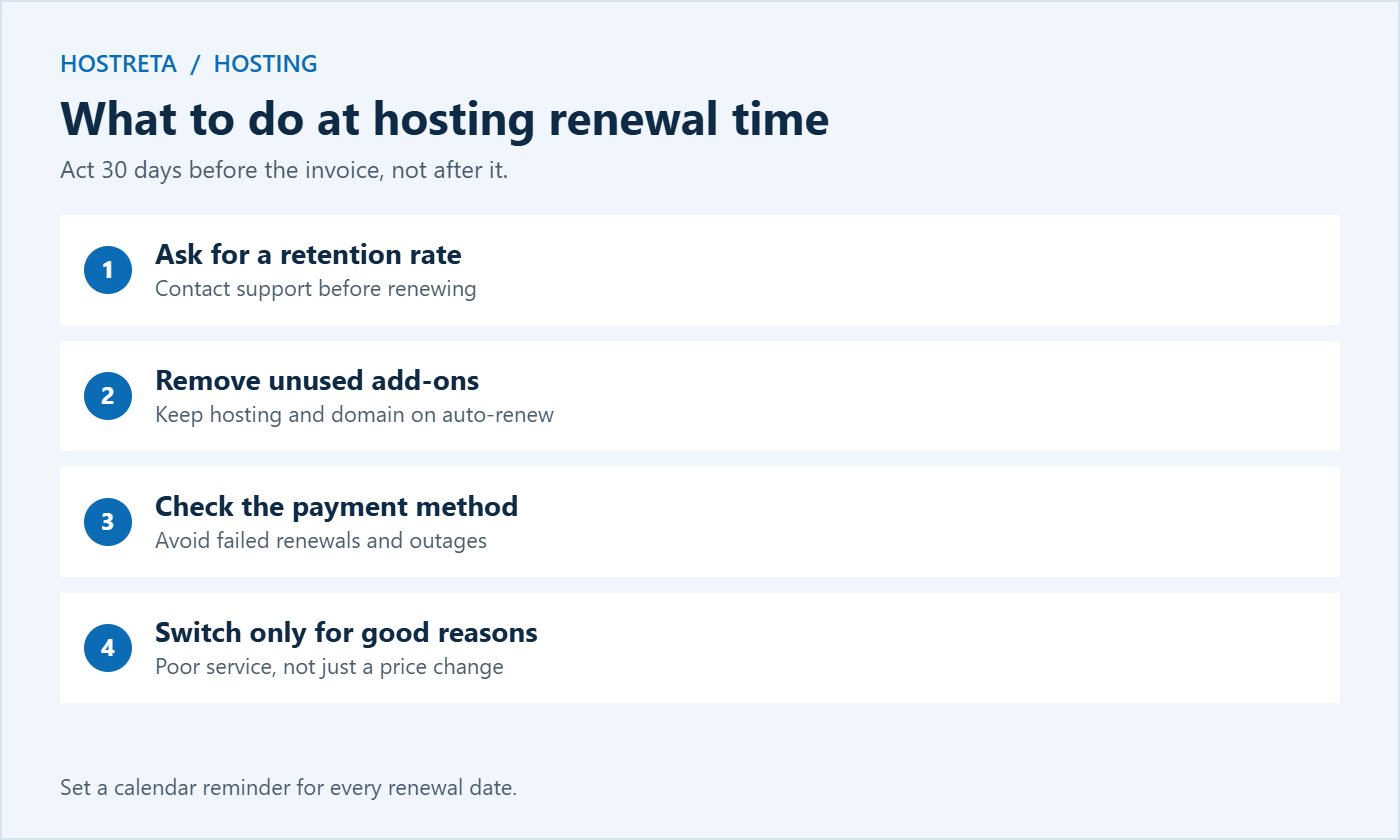
Many customers never ask, so they pay the full standard price. A polite request often works, especially if you’ve been a customer for a while. Try a message like this:
“Hello, my hosting renewal is due on [date]. I’ve been happy with the service, but the renewal price is significantly higher than what I paid. Are there any loyalty or multi-year discounts available? I’m comparing a few options before I renew.”
If the host can’t help, you’ll at least know your options and can compare properly before deciding.
Switching hosts can save money, but it also takes time and carries some risk. It usually makes sense when:
Avoid switching in the weeks before a big sale such as Black Friday. Plan the move for a quieter period, test the new server fully, and lower your DNS TTL in advance so the switch is quick — see TTL in DNS: 5 Powerful Steps for Safer Changes.
Many hosts offer free migration for new customers. Take a full backup first, ask the new host to copy the site, test everything on a temporary address, and only then update DNS. Keep the old hosting active for a few days after the switch in case you need anything from it, and cancel only once you’re sure everything works.
Late November brings the biggest hosting discounts of the year, and they can be genuinely good value. Before you buy, check a few details so the deal stays a good deal at hosting renewal:
A long term at a low price can be excellent if the host is reliable, because you lock in the discount for years. It’s poor value if you end up leaving early or the plan doesn’t fit your needs. Read the guide What Is Web Hosting? A Beginner’s Guide for 2026 if you’re new to comparing plans.
Hosting is rarely the only renewal you manage. Domains, SSL certificates, email, premium plugins, themes, and SaaS tools all renew on their own schedules. Keep one list with the service, account, renewal date, price, and payment method, and review it monthly. Premium plugin renewals in particular can add up — see Premium WordPress Plugins: 7 Essential Checks for a Smart Purchase and Lifetime Deals vs Annual Plans for Software Tools.
Hosts use low introductory prices to win new customers, then charge the standard rate once the first term ends. The renewal price is the real long-term cost.
You can ask for a retention discount, choose a longer first term, or move to a new host with a fresh introductory offer — but weigh migration effort and risk.
Rarely. It offers flexibility, but annual or multi-year terms usually cost less per month.
Often, yes. Check the domain renewal price and whether privacy protection is included before registering.
About 30 to 60 days before the renewal date. That gives you time to ask for a discount, compare providers, and move if necessary without rushing.
Usually, yes, if auto-renew is on and your payment method is valid. Keep auto-renew enabled for hosting and domains to avoid accidental downtime, but review the invoice amount in advance.
Most hosts let you upgrade or downgrade at renewal. Downgrading can save money if you’re paying for resources you don’t use, but check that the smaller plan still meets your needs.
Often, yes. Even small customers can receive retention offers. It costs nothing to ask politely before your hosting renewal date.
The cheapest-looking hosting plan is rarely the cheapest over time. Read the renewal price before you buy, calculate the full three-year cost including domains and add-ons, and weigh it against speed, support, and features. When your hosting renewal approaches, ask for a better rate, remove services you no longer need, and switch only when the numbers and the service quality both point that way.
With a little planning, you can enjoy the best introductory deals without being caught out a year later, and keep your website on a plan that fits both your budget and your growth. Make it a yearly habit to review every hosting renewal at least a month in advance, and those surprising invoices will become a thing of the past.
Often, yes. A slightly higher first-year price with a fair renewal rate can save a lot over three years, and hosts that price this way tend to rely on keeping customers rather than constantly finding new ones. That usually shows in the quality of their support and service, which matters as much as the invoice. Compare the full picture before deciding, and remember that a reliable host saves you time as well as money.
Before your next purchase, open the pricing page, find the renewal rate, and run the three-year numbers. It takes ten minutes and can save you hundreds over the life of your website. Then add the renewal date to your calendar so you have time to review it calmly when it comes around.
Transparent pricing, reliable service, and a little planning are the best protection against expensive surprises. Choose providers that show their renewal rates openly and treat existing customers fairly.
Smart buyers look past the headline number and plan for the full life of their website, year after year.
Check the numbers first, then commit.
We may earn a commission on purchases made through these links, at no extra cost to you.
Don’t miss the chance to participate in the biggest giveaway of this year.