Marketing

How to Build a Holiday Email List Before Black Friday
Ads get expensive in December and social reach is unpredictable, but an email list costs almost nothing to send to and reaches people who already chose to hear from you. If your email list is small, the weeks before the holidays are the best possible time to grow it — and every subscriber you add now can be reached again on Black Friday, Cyber Monday, and in every campaign after that.
This guide focuses on the practical mechanics of building a holiday email list in 2026: why it matters more than ads, lead magnets that work for shoppers, where to place forms, consent and the latest sender rules from Gmail, Yahoo, and Outlook, the welcome email, segmentation, and keeping subscribers warm until Black Friday on November 27, 2026.
The strategic side — early access offers and waitlists — is covered in Grow Your Email List: 7 Essential Checks for a Great Holiday Campaign. This article is about the mechanics.
Before you collect addresses, choose where your email list will live. For a WooCommerce store, look for a platform that integrates with your store, supports automations such as welcome and abandoned-cart emails, lets you segment by purchase history, and handles unsubscribes and authentication properly. Options are compared in Best Email Marketing Platforms for Small Businesses, and setting up a signup form in WordPress is covered in How to Add a Newsletter Signup to WordPress.
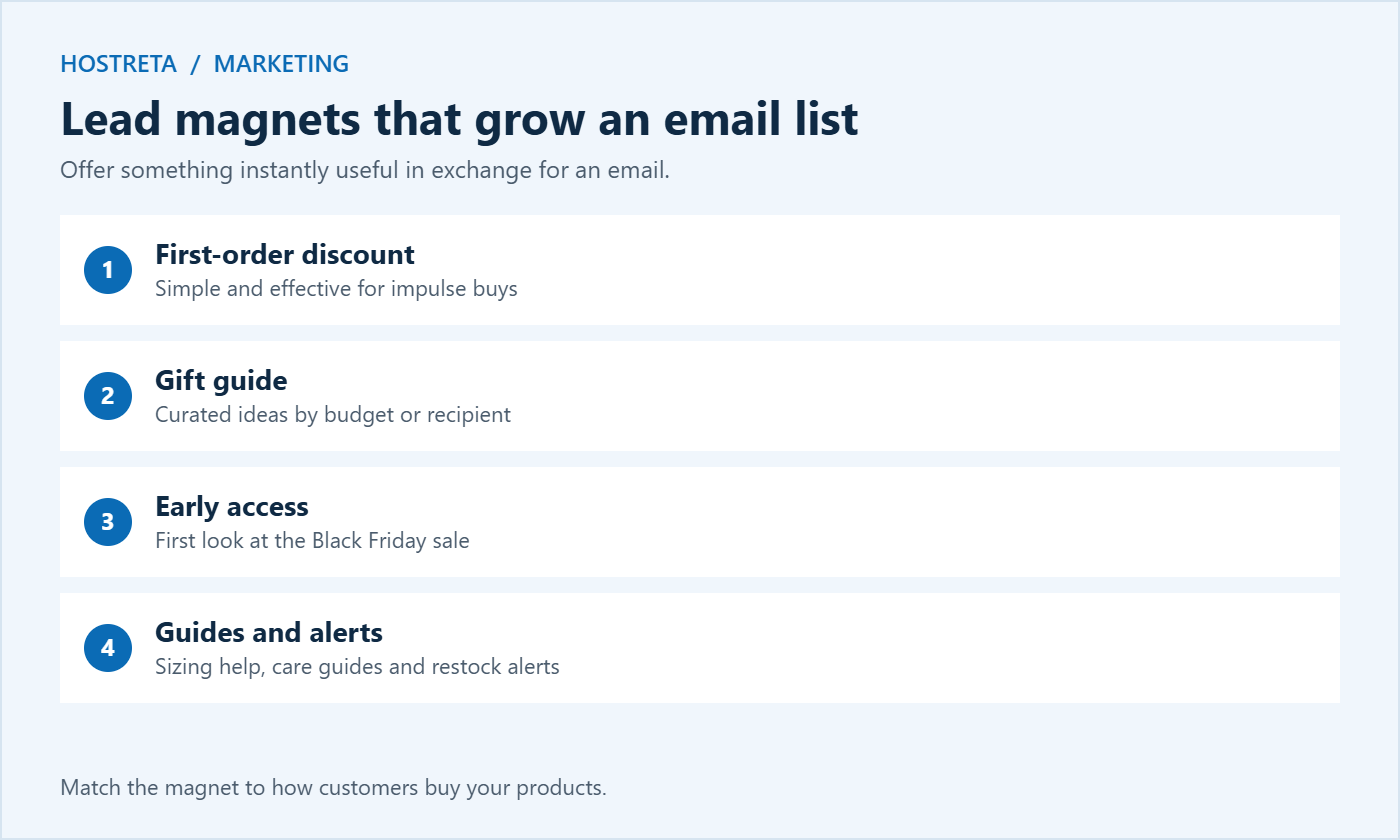
A lead magnet is what someone gets in exchange for their email. For stores, the best ones are instantly useful:
Match the magnet to the product. A discount suits impulse buys; a guide suits considered purchases. Set up the code carefully — see How to Set Up WooCommerce Coupons for a Holiday Sale.
Ask for the email address only. Every extra field reduces signups. Make sure the form is fast and doesn’t block rendering — see Speed Up WooCommerce Product Pages.
Popups grow an email list quickly, but used badly they hurt the experience and can affect mobile search rankings. Show them after a visitor has scrolled or spent some time on the page, never instantly. Make the close button obvious, limit how often the same person sees it, and avoid full-screen popups on mobile that hide the content. A small slide-in or banner often converts nearly as well with far less annoyance.
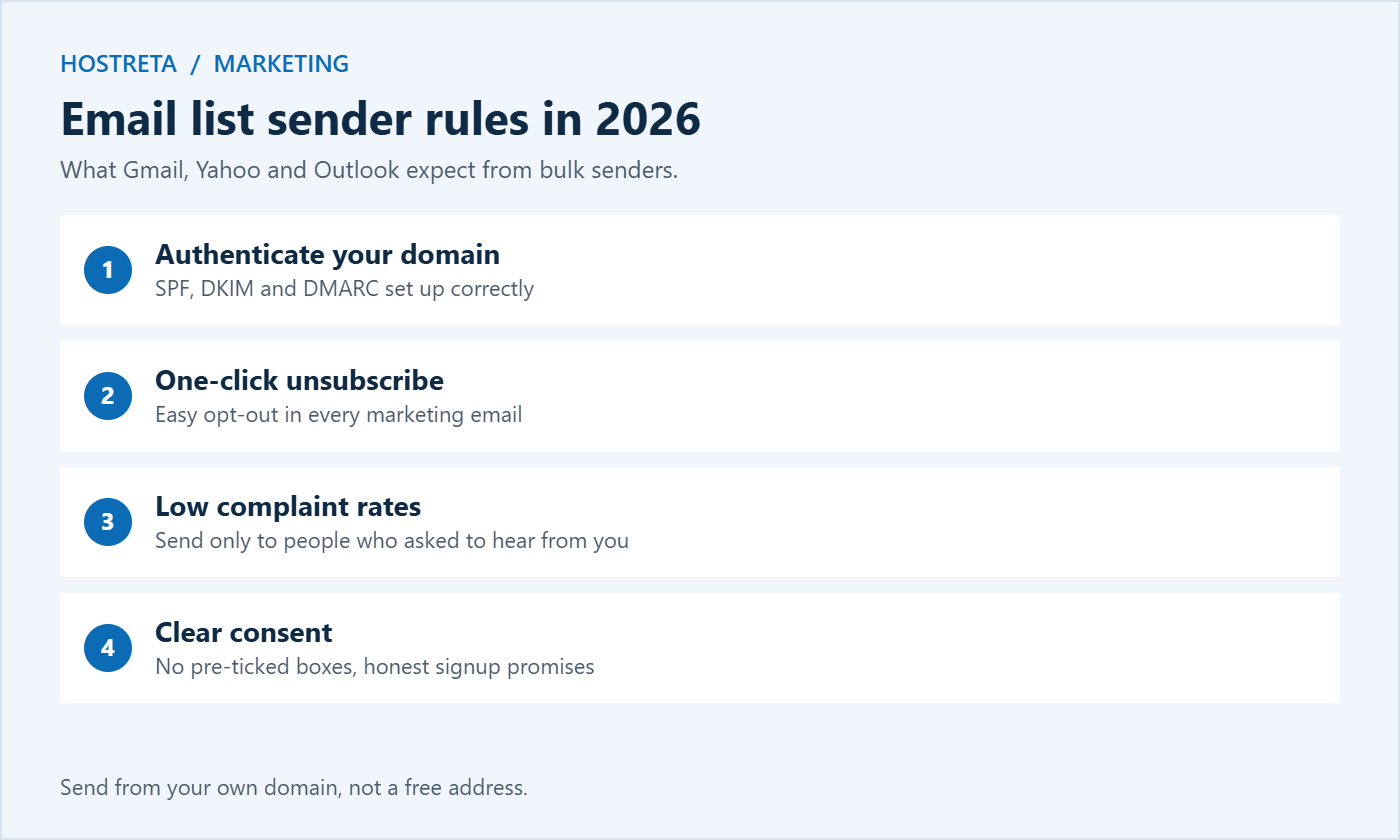
Growing an email list properly means collecting consent and sending in a way mailbox providers trust:
Sending from your own domain builds trust. A business email plan from Kawedma, Google Workspace, or enterprise email gives you a professional address with proper authentication.
Send it immediately, automatically. It should:
A full sequence is covered in Welcome Email Series: 4 Essential Messages. Make sure it sends from your own domain — see WordPress Email Sender Name: 2 Easy Ways to Change It.
Not every subscriber wants the same message. Simple segments make your emails more relevant and protect your sender reputation:
More detail is in Email Segmentation for Small Businesses Made Simple.
Your website is only one place to collect signups. Share the early-access offer on every social platform, pin it to the top of your profiles, mention it in packaging inserts and order confirmation emails, and add it to your email signature. Scheduling tools such as SocialBee make it easy to keep a steady stream of signup posts going. Track each source with UTM parameters so you know which channel grows your email list fastest — see UTM Parameters: Track Every Campaign Link.
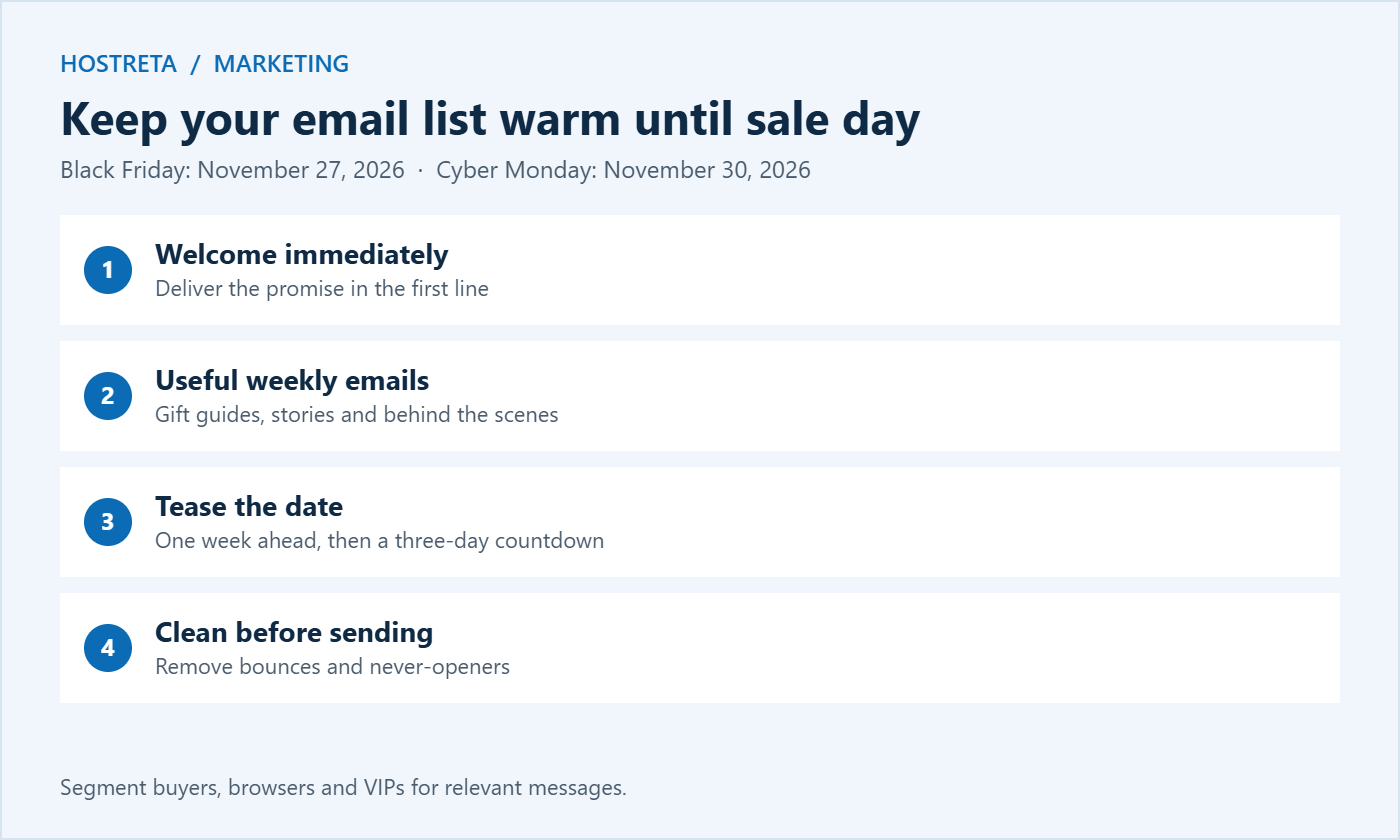
If you’re starting from a small email list in early November, this simple plan gets you to Black Friday with an engaged audience:
Line these tasks up with your wider plan in Black Friday Marketing Calendar: A Countdown Plan for Small Stores.
A bigger email list only helps if people read what you send. Keep these principles in mind:
More advice is in How to Write a Newsletter People Actually Open. Open rates are less reliable than they used to be because Apple Mail Privacy Protection loads images automatically, so judge success mainly by clicks and sales.
Helpful content attracts visitors who are actively researching gifts and products, which makes them ideal subscribers. A few content types work especially well in November:
Publish these early so they have time to appear in search results before peak season. Basic SEO helps — see On-Page SEO Checklist: Optimize Every Post — and a tool such as Marketgoo gives simple, step-by-step SEO recommendations. Repurpose each guide into social posts, short videos, and pins to send more readers to your forms — see How to Repurpose One Blog Post Into 10 Pieces of Content.
Track a few simple numbers every week during November:
If one form converts far better than others, give it more visibility. If unsubscribes rise, slow down and make emails more useful. Small weekly adjustments add up to a much healthier email list by sale day.
A big send can bring hundreds of visitors within minutes. Make sure your hosting can cope — see PHP Workers Explained. Kawedma WordPress hosting and managed WordPress hosting powered by Rocket.net handle traffic spikes well, and an SSL certificate keeps signup forms and checkout secure.
The work doesn’t stop when the sale ends. Many people join your email list for a discount and never hear from you again in a meaningful way. Plan what happens next:
Customers who joined during the holidays and buy again in the new year are among the most valuable you’ll ever have. Treat the holiday email list as the start of a relationship, not a one-off campaign.
Some subscribers will add products to their cart and leave. Automated abandoned-cart emails, sent within an hour and again a day later, recover a share of these sales with very little effort — see Best Abandoned Cart Plugins for WooCommerce Compared. Make sure these emails respect consent rules and include an easy unsubscribe.
There’s no minimum. Even a few hundred engaged subscribers can produce meaningful sales. Focus on quality and relevance rather than a big number.
No. Bought lists damage your sender reputation, break consent rules, and rarely convert. Grow your own email list with honest offers.
Once a week is a good rhythm in November, rising to once a day during sale week for engaged segments.
Many stores see 1–5% of visitors subscribe. A strong lead magnet and well-placed forms push you toward the higher end.
Double opt-in adds a confirmation step, so your email list grows a little more slowly. In return, you get fewer fake or mistyped addresses, better engagement, and stronger proof of consent. For most stores it’s worth it.
Only if they agreed to receive marketing. In many regions, existing customers can receive related offers if they were given a clear chance to opt out, but rules differ. When in doubt, ask for consent at checkout.
Send a short re-engagement series asking if they still want to hear from you. Remove those who don’t respond. A smaller, active email list delivers better than a large, inactive one.
No. Use one main email list and tag or segment subscribers by source and interest. That keeps everything in one place and makes reporting easier.
Building an email list before the holidays is one of the highest-return tasks a small store can do. Pick a lead magnet today, add one form to your most visited page, and write your welcome email. Then grow from there, week by week, until Black Friday arrives with an audience ready to buy.
Every subscriber you add now is a customer you can reach again, for free, long after the holiday season ends.
We may earn a commission on purchases made through these links, at no extra cost to you.
Don’t miss the chance to participate in the biggest giveaway of this year.